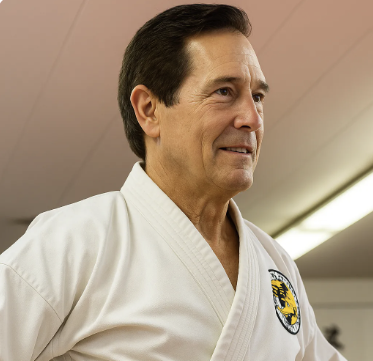
Our legacy
Bringing world-class training to you OKINAWAN KARATE — HISTORY, FACTS, AND LEGACY. Okinawan Karate is far more than a martial art designed for fighting. Behind every punch, kick, stance, and kata lies a long history connected to the culture of the Ryukyu Kingdom, the people of Okinawa, and centuries of cultural exchange with China and other parts of Asia.
Okinawa is widely recognized as one of the principal birthplaces of modern Karate. Its martial traditions developed through a combination of indigenous Okinawan fighting methods and influences introduced through international trade and cultural exchange. One of the early terms associated with Okinawan martial arts was “Ti” or “Te,” meaning “hand.”
These indigenous fighting traditions evolved over generations and eventually became part of the foundation from which modern Karate developed. Three historical areas are especially important when discussing Okinawan Karate: Shuri, Naha, and Tomari. Their traditions became known as Shuri-te, Naha-te, and Tomari-te.
Shuri-te developed around Shuri, the political center of the Ryukyu Kingdom. It became associated with techniques emphasizing speed, movement, timing, and efficient body mechanics. Its influence can be seen in several later Karate traditions. Naha-te developed around Naha, an important port city. Its training traditionally emphasized close-range techniques, powerful body structure, breathing, stability, and conditioning. Naha-te eventually became a major foundation for Goju-ryu Karate. Tomari-te developed in the Tomari area and also contributed significantly to Okinawan Karate.
Historically, however, these traditions were not completely isolated. Teachers and students interacted, exchanged knowledge, and influenced one another.One of the most important figures in Karate history was Anko Itosu. He played a major role in introducing Karate training into Okinawan education. This was a crucial turning point because martial arts training could reach younger generations on a much larger scale. Karate therefore gradually developed beyond a private fighting tradition. Training became a method of physical education and character development. Students were expected not only to improve their fighting ability, but also their discipline, perseverance, health, concentration, and behavior.
Traditional Okinawan Karate contains several important training elements. Kihon refers to fundamental techniques. Punches, kicks, blocks, stances, footwork, and body movements are repeated extensively to develop precision, coordination, balance, and proper mechanics.
Then there is Kata, a structured sequence of movements. Kata is not simply a martial arts performance. Each movement can contain practical applications for combat, known as bunkai. Studying bunkai helps practitioners understand the purpose behind the movements rather than merely memorizing their appearance.
Kumite, or partner training, develops timing, distance, reaction, control, movement, and tactical awareness. Traditional training emphasizes respect and control because the purpose of practice is improvement, not uncontrolled aggression.
Another traditional training tool is the Makiwara. It can be used to develop striking alignment, coordination, body structure, accuracy, and the ability to transfer power efficiently. Proper makiwara training is not simply about making the hands harder. It requires correct technique, posture, alignment, and body control.
Okinawan Karate also has a close relationship with Kobudo, the traditional martial arts of Okinawa involving weapons. Famous examples include the bo, sai, tonfa, nunchaku, and kama. This connection demonstrates that Okinawan martial culture extends beyond empty-hand Karate. Several great masters helped preserve and develop Okinawan traditions. Chojun Miyagi, for example, became one of the central figures in the development of Goju-ryu. Shuri-te traditions also contributed to the development of Shorin-ryu and other Karate systems. During the twentieth century, Okinawan Karate spread beyond the island and into mainland Japan. Teachers carried their techniques, kata, training methods, and philosophies to new communities.
From Japan, Karate eventually spread throughout the world. As Karate became international, it also evolved. Some organizations developed competitive formats with specific rules, scoring systems, and tournament structures. Sport Karate emphasizes speed, timing, controlled techniques, strategy, and performance under competition rules. Traditional Karate, meanwhile, often maintains a broader focus that includes Kihon, Kata, Bunkai, physical conditioning, self-defense, philosophy, and personal development. This distinction is important.
Sport Karate and traditional Karate share historical roots, but their training goals can be different. The greatest legacy of Okinawan Karate is not simply the ability to defeat an opponent. Its deeper lesson is self-control. Strength without discipline can become dangerous. Speed without accuracy has limited value. Technique without consistency cannot become reliable skill. Knowledge without practice remains only potential.
A Karate practitioner learns to train when nobody is watching, repeat difficult movements until they improve, respect teachers and training partners, and remain humble even as their abilities grow. That is why Okinawan Karate continues to matter today. From traditional training grounds in Okinawa to dojos across the world, its legacy continues through Kihon, Kata, Bunkai, Kumite, discipline, perseverance, and character.
Karate begins with empty hands, but its greatest lesson is much deeper:
True strength is not merely the ability to fight.
True strength is the ability to control yourself.
Key milestones
1973 started training with Jerry Barbar Shihan of the Mahato Karate Association of the USA
- 1990s – Foundation in excellence
- Shihan Michael Ray Graves established Mahato Karate with a vision of bringing authentic Okinawan karate to Delaware. Starting with traditional values and uncompromising standards.
- 2000s – Program innovation
- Launched Kidini Karate Bully Prevention Child Safety for ages 3-6 and Karate BOX and KoBu Power fitness programs. Created comprehensive curriculum covering traditional karate, weapons training, and character development.
- Today – Your neighborhood dojo
- Now serving families across Delaware Valley with programs
- Kidini Karate (Ages 3-6)
- Small Samurai Karate (Ages 6-12)
- Teens - Adult Karate
- Fitness and personal training